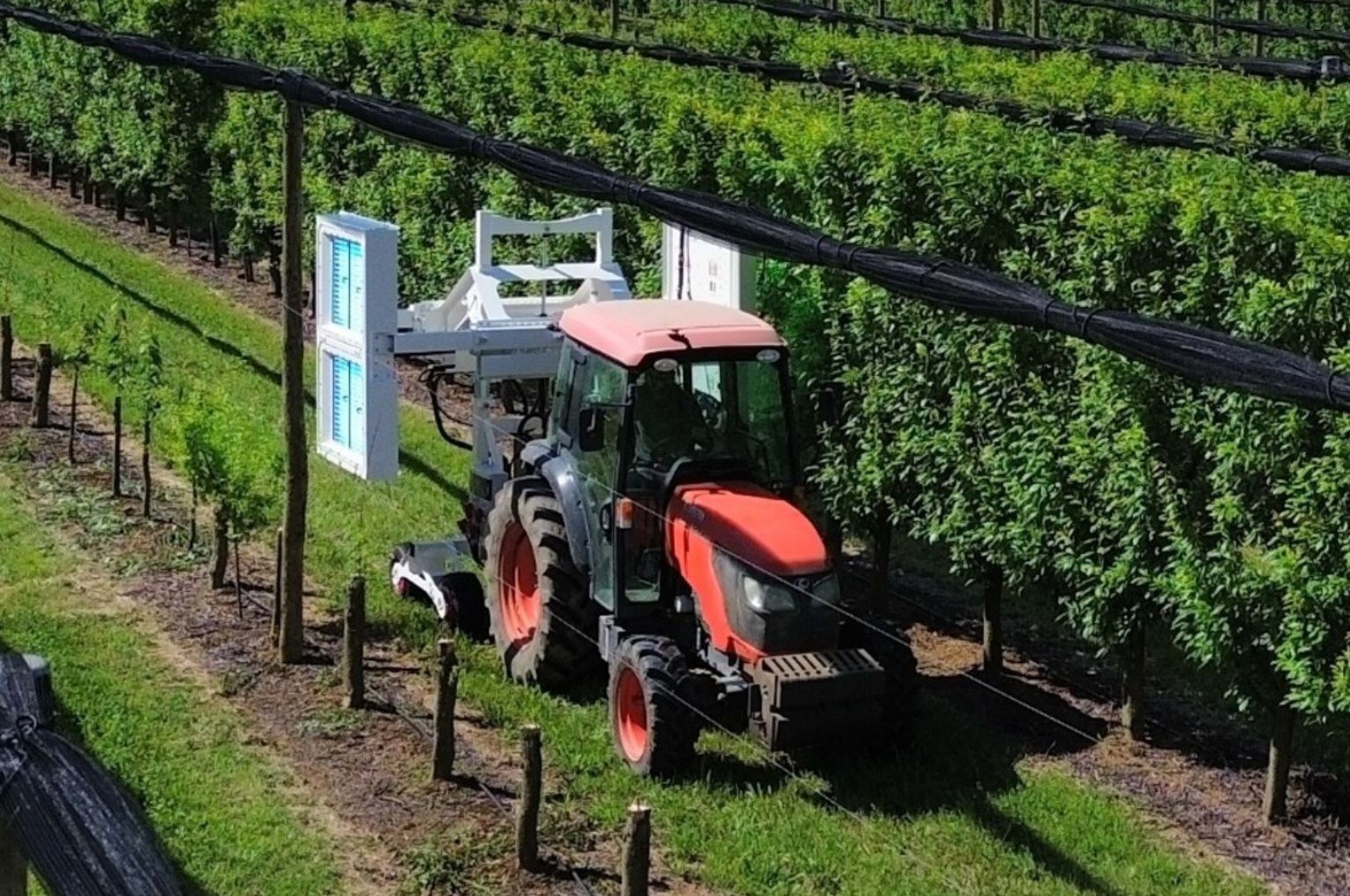
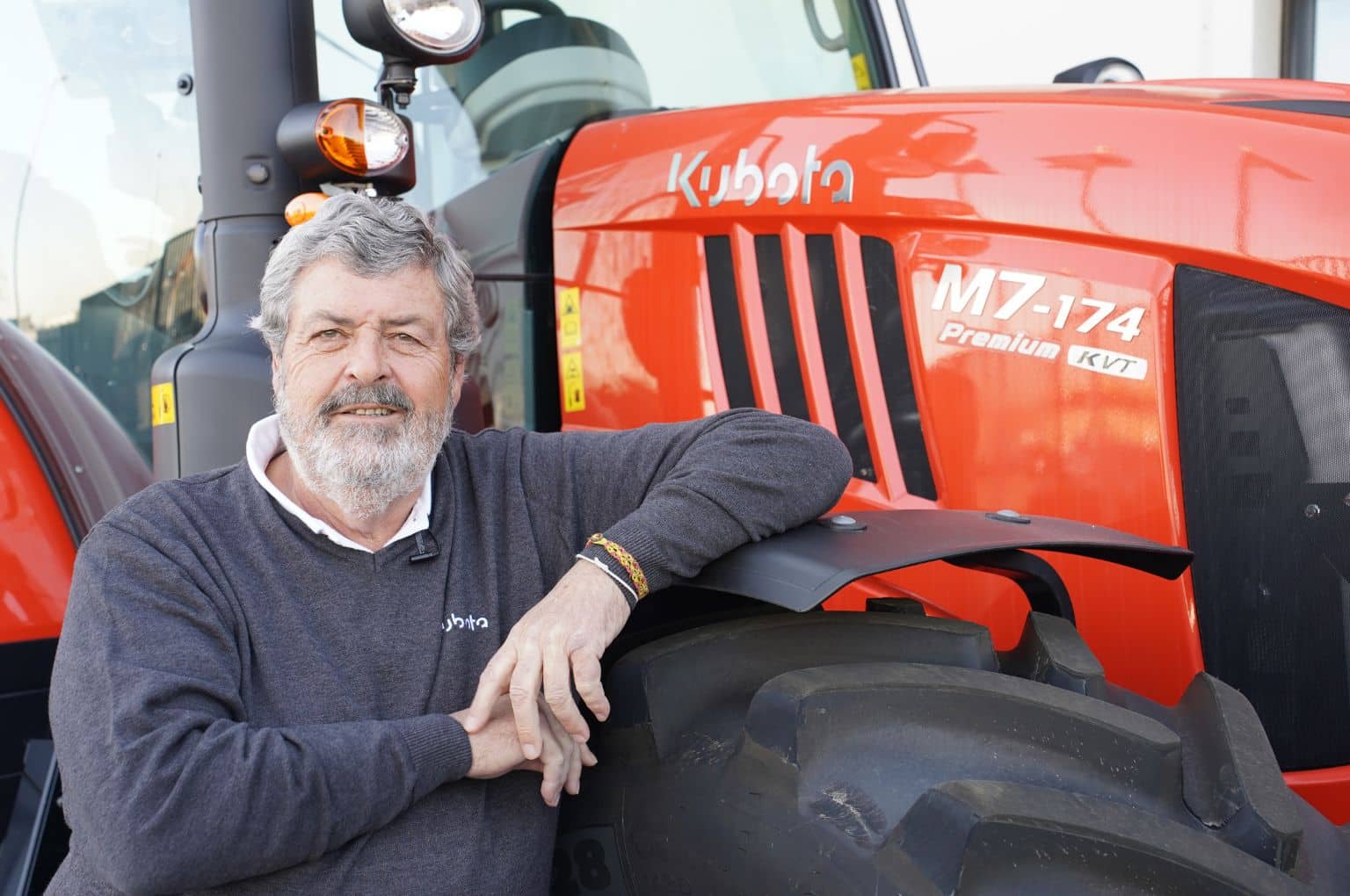
Kubota is moving towards a more sustainable, efficient and profitable agriculture. Germán Martínez Sainz-Trápaga, president of Kubota Spain, and Diego Martín, specialist in Smart Farming Solutions, explain why Kubota invests in
UV Boosting, technology that strengthens plants’ natural defences through UV-C light.
Agriculture faces the dual challenge of producing more and better-quality products while simultaneously reducing environmental impact and ensuring that farming remains economically viable for those who work the land. Climate variability, regulatory pressure, and the growing demand for sustainable practices are accelerating the need for new solutions that protect crops without compromising ecosystems.
In this context, Kubota is strengthening its commitment to sustainable innovation by investing in
UV Boosting, innovative technology designed to enhance the natural defences of plants. By stimulating protective responses through controlled ultraviolet light, UV Boosting improves crop quality while leading to potential yield increase, all aligned with the principles of agricultural sustainability.
Preventive treatment
“We are addressing problems that go hand in hand with the evolution of society”, says Germán Martínez Sainz-Trápaga, president of Kubota Spain. “. Through the Kubota Innovation Center in the Netherlands, we are looking for smart farming solutions to address today’s challenges. These are lack of labour, the increase in costs of traditional treatments and the need for environmentally sustainable practices, without emissions.
UV Boosting is one of these technologies in which Kubota is investing, because it is sustainable, clean and improves the production costs of farmers.
It is a well-known technology, since ultraviolet C radiation that is filtered by the Earth’s ozone layer, is used in disinfection treatments, for example, in hospital operating rooms, very effectively.”
UV Boosting uses flashes of this radiation C on high-value plants: fruit trees, woodlands, golf courses, grass, etc., where the main epidemics are fungi and thanks to this light and repeated emission, a strengthening of the plant itself occurs. It would be the equivalent of when we are vaccinated against a virus and immunized, the body reacts. These UV-C flashes cause the plant to increase its levels of salicylic acid, which is what invigorates it and makes it stronger. Thus, when there is a fungal attack, when there is a stress to the drought because it does not rain or when there is an excess of water, the plant is already more resistant.
It is a preventive treatment, does not carry chemicals, has no side effects or unintended consequences and is sustainable, because there is no pollution. The demonstrated effects are very good in combination with a reduction of the fungal treatments of these plants, with which there is a direct saving on production cost. It is also a very cheap technology, very affordable to acquire and very affordable to apply.
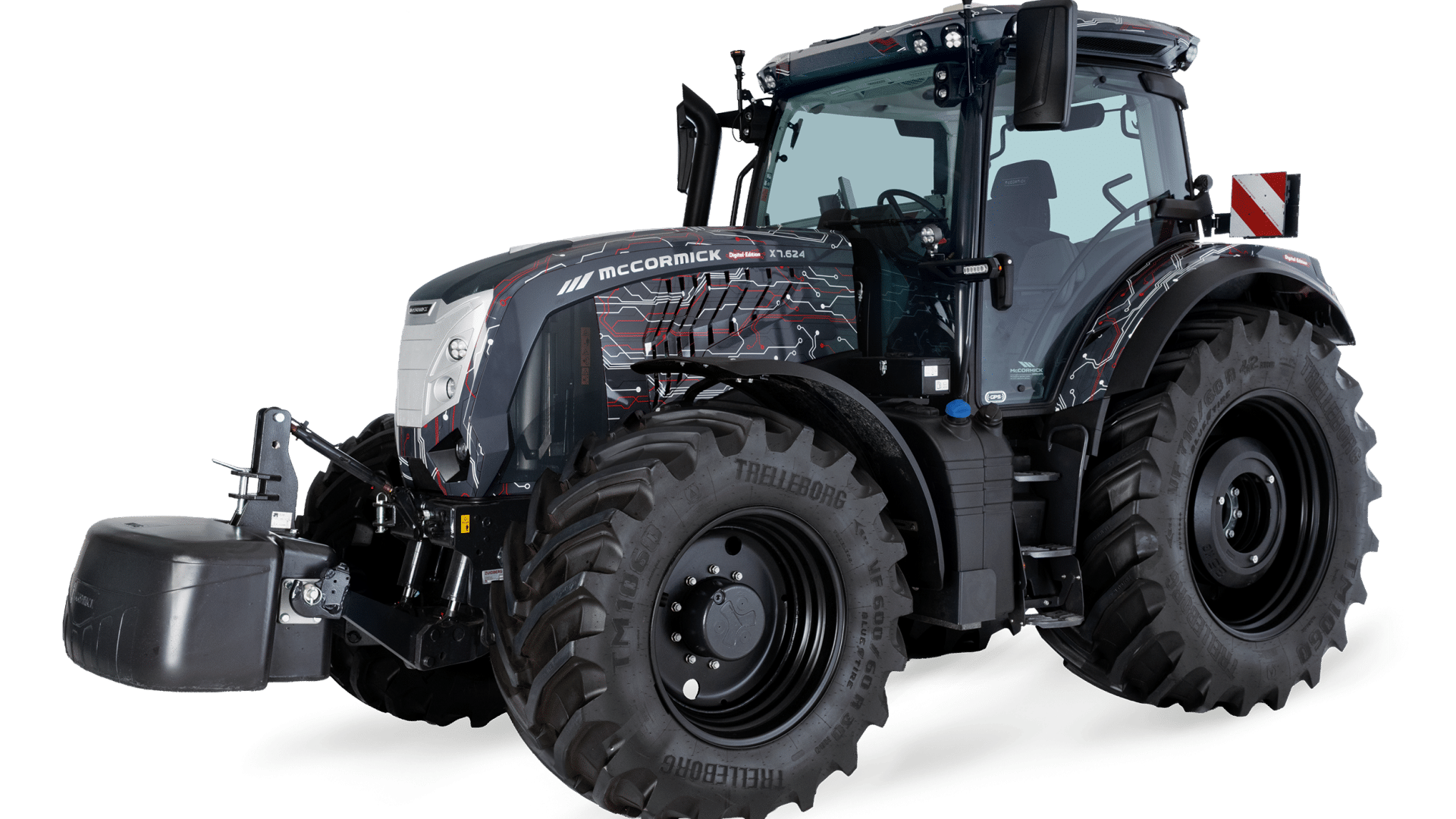
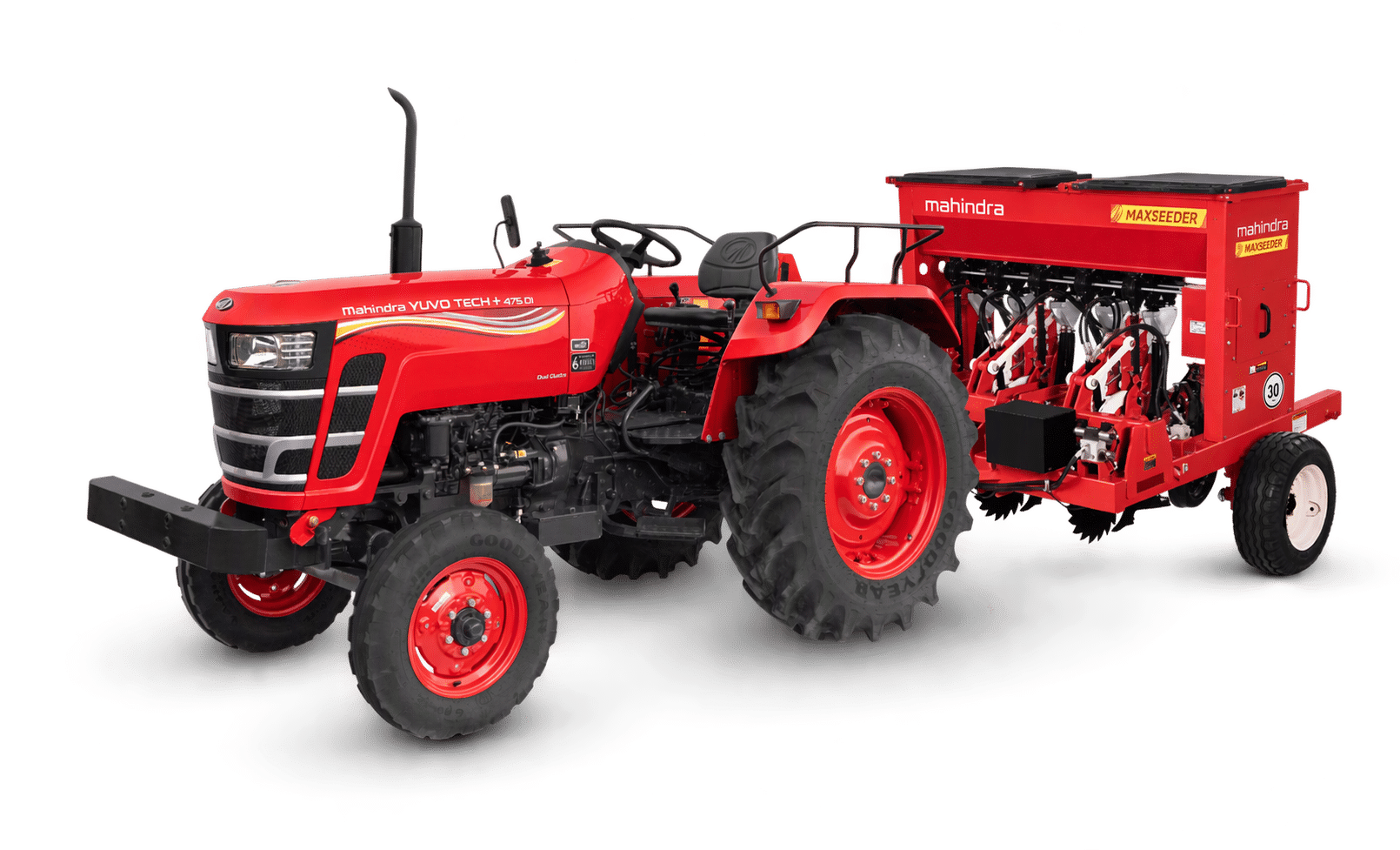
This technology is user-friendly because it integrates seamlessly with the tractor the farmers are already familiar with. The implement attaches to the tractor’s rear hitch and operates at a constant speed. It can be applied at any time and with low fuel consumption, requiring only 12 HP at the power take-off (PTO) per emission panel. Furthermore, at a time when the list of permitted agrochemicals and fungicides is being increasingly reduced by EU authorities, this technology facilitates prevention and invigorates the plant.
The proven agronomic results in various crops such as pear, apple, super-intensive and intensive olive groves, pistachio, almond, stone fruit, peach, apricot, peach, cherry, etc. show increased production and improved fruit quality. In some cases, it results in better skin quality with fewer blemishes, which positively impacts the market price. It also achieves earlier color change during fruit ripening. All of this, taken together, results in a higher market value for the product at a very low cost. We are talking about very high-value products, such as fruit or olive oil, and with this technology, by lowering the cost of production and raising the selling price, the farmer’s profit margin will be higher with a very low investment cost.
Different crops
“We have specific models for the different crops (vineyards, orchards, olive groves, turf and in expansion)”, says smart solutions specialist Diego Martin. “But during 2026 we are focused on the cultivation of vines, fruit trees and olive groves. These models are suspended implements (category 1⁄2) but have a support wheel to work in the field increasing stability during use, which helps maintain the optimal distance between the crop and the panels (15-25 cm working at 4 km/h).
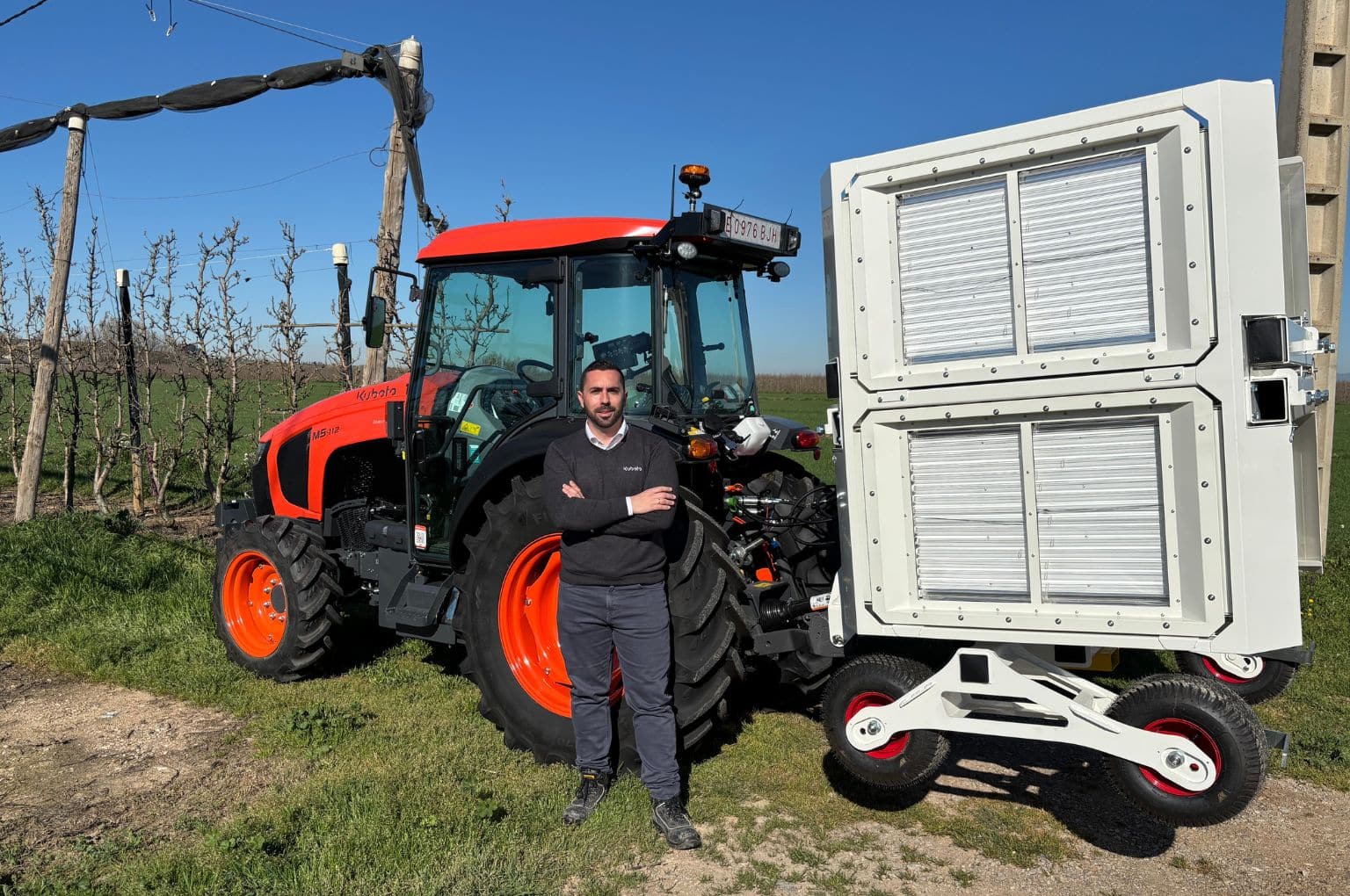
In vineyards, 3-4 stimulations are performed and we offer a model of two panels of 3.5 kW with a total required power of 12 HP, with a weight of 850 kg.
It is compact and allows to work on crops with a street width of 1,30-3.00 m and work on slopes or fields with narrow headers, which provides great versatility.
Additionally, we can offer a 4-panel model applying stimulation to two grow lines at the same time. For fruit and olive groves, 6 stimulations must be carried out using a model of 4 panels of 3.5 kW (2 for each side) with a total required power of 24 HP, a weight of 1,100 kg, designed to work in lines of 2.00-5.00 m.
The low power demand allows to work with the TDF in ECO mode, which further reduces engine rpm and therefore fuel consumption. All models can be mechanically adjusted from the factory or Kubota dealer to fit crop dimensions. The operator will be able to make optimal adjustment to crop conditions at any time by electro-hydraulic actuation from the cab. In addition, the controller is easy to understand and use, allowing the operator to adapt quickly.”