NIRS technology improves efficiency
Organic manure is a fantastic nutrient source, but efficient and precise application can be challenging due to its natural variations. Even when mixing it up really well, there’s still room for improvement. That’s where an Near Infrared Spectroscopy (NIRS) sensor can step in to make the most of organic manure. A NIRS sensor works by […]
Organic manure is a fantastic nutrient source, but efficient and precise application can be challenging due to its natural variations. Even when mixing it up really well, there’s still room for improvement. That’s where an Near Infrared Spectroscopy (NIRS) sensor can step in to make the most of organic manure.
A NIRS sensor works by emitting near-infrared light into organic manure. This light interacts with the molecules in the manure, creating a unique fingerprint based on its composition. By measuring the amount of light absorbed and reflected and comparing these values to reference data, the sensor can determine the levels of nitrogen (N), phosphorus (P), potassium (K), and dry matter in the manure. These measurements can be used as input for the rate control system on the applicator or in the creation of as-applied maps.
Variable rate application
The integration of NIRS data into the OXBO Rate Control System enhances variable rate application (VRA) for organic manure in agriculture. NIRS sensors analyze real-time manure composition, including nitrogen, phosphorus, potassium, and dry matter. This data is seamlessly integrated with GPS and nutrient prescription maps within the OXBO system. As manure is applied, the VRA system dynamically adjusts application rates based on field-specific requirements. This precise approach optimizes crop yield, minimizes environmental impact through reduced over-application, and lowers costs. Continuous data collection empowers farmers to refine nutrient management strategies. Integrating NIRS data into the OXBO Rate Control System further advances the efficiency and sustainability of organic manure application in modern farming.
AS-applied maps
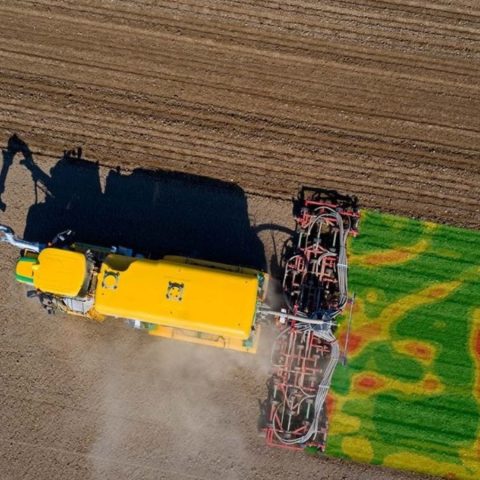
As-applied maps are a valuable feature of in-line NIRS manure measurement. They provide farmers with a visual representation of which nutrients have been applied to different sections of the field. These maps are instrumental in analyzing the nutrient distribution across the field, aiding in the creation of prescription maps for fertilizer application. By understanding where specific nutrients have been applied, farmers can fine-tune their future nutrient management strategies, optimizing crop growth and reducing wastage. As-applied maps, in conjunction with NIRS technology, enhance precision agriculture practices and promote efficient and sustainable farming.