India industry urges stage V delay
Top tractor makers in India are asking their government to delay implementing stage V (TREM V) emission standards, which are set to start in April 2026. According to trade and news platform Tractor Gyan, farmers in India will postpone investing in new tractors, negatively impacting the tractor industry. Although the BS VI norms were already […]
By Redazione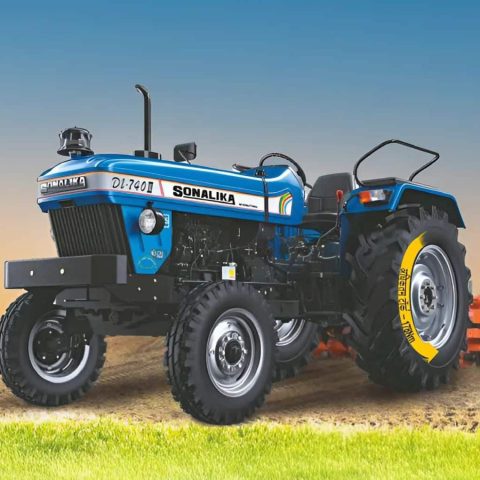
Top tractor makers in India are asking their government to delay implementing stage V (TREM V) emission standards, which are set to start in April 2026. According to trade and news platform Tractor Gyan, farmers in India will postpone investing in new tractors, negatively impacting the tractor industry.
Although the BS VI norms were already rolled out for 2 and 4-wheelers, including commercial vehicles (except tractors) across India from 1 April 2020 onwards, they have drastically reduced vehicle emissions and also increased costs for manufacturers and buyers. Now, the government wants to apply TREM V norms to all tractors with engines above 26 HP.
India mainly uses tractors with less than 50 horsepower, while European countries use tractors with 200 to 250 horsepower. A.S. Mittal, President of the Tractor Manufacturers Association (TMA), says it doesn’t make sense to use the same “Euro V-style norms” in both markets.
Countries like the US, Australia, Brazil, and Thailand have also raised similar concerns, asking if these kinds of rules are useful for farm equipment. The new rules could make tractors more expensive.
Mr. Raman Mittal, Joint Managing Director, International Tractors Ltd., stated, “The industry is very competitive. With new rules, tractor prices may go up by at least 15%, especially for small farmers who may find it difficult to afford these upgraded tractors. This TREM V implementation would badly impact the tractor buying tendency of small and marginal farmers. “
TREM V Emission Norms refer to Tractor Emission Norms Stage V. These environmental regulations, set by the Government of India, control the amount of pollution (mainly harmful gases like NOx, CO, and particulate matter) released by diesel-powered tractor engines. It mandates advanced engine technologies like Diesel Particulate Filters (DPF), Selective Catalytic Reduction (SCR), and Electronic Control Modules (ECM). Under TREM V, tractors would be more technologically advanced, equipped with costly engines with higher maintenance needs, due to sensitive electronic parts. The cost of manufacturing and selling a tractor increases significantly by up to 15% or more.
The problem of low mechanization
India’s farm mechanization is only 47%, while in China it’s 60% and in Brazil it’s 75%. If TREM V makes tractors more expensive, it could make it even harder for people to use machinery, especially small landholding farmers. Mechanization is important for increasing productivity, but making it expensive could slow our growth.
A postponement would reduce financial strain on the farm industry, which is still recovering from economic slowdowns. Manufacturers have more time to make innovative parts in their home countries, reducing imports and costs. Farmers and service networks can gradually adopt new technologies, ensuring seamless operations.
This delay has both pros and cons for the farmers. Farmers would be able to continue buying tractors at current prices without the 15–20% hike. Also they can get time to learn about new emission technologies and their maintenance. Farmers seeking cheaper options may increase demand for secondhand tractors. Tractor sales, especially under 50 HP which dominate India’s market, would certainly shrink.
Short-term economic effects
TREM V emission limits reduce air pollution and align India with global environmental norms, although they have short-term economic effects. A 15% price increase could affect sales and agricultural economics for most Indian farmers who utilise low-priced tractors. Staged or delayed implementation would allow manufacturers and farmers to respond, adapt technology, and preserve agricultural productivity.
Although environmental sustainability is vital, Tractor Gyan prioritizes farmers’ economic reality. A balanced approach, such as staged implementation, subsidies and tax breaks can help India clean up its farmland without overburdening its farmers. Delays are meant to protect farmers and rural jobs, not halt growth, according to Tractor Gyan.