CLAAS, MAN Engines and WTZ Roßlau Join Forces to Develop Ammonia-Powered Agricultural Machinery
The three German companies are collaborating on the GAMCO research project to investigate the potential of ammonia as an alternative fuel for high-performance agricultural machinery. With a budget of €3.2 million, the initiative aims to demonstrate how internal combustion engines could contribute to the decarbonization of farming
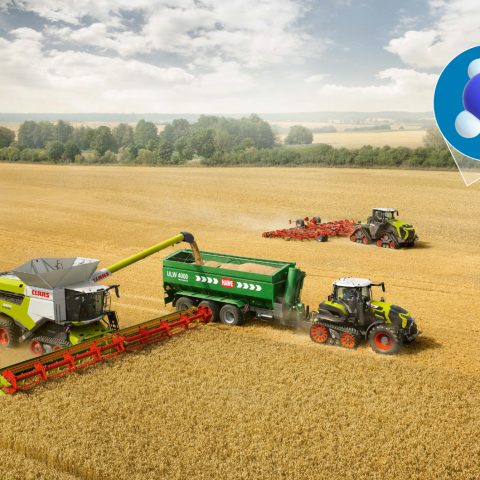
CLAAS, MAN Engines and WTZ Roßlau have joined forces to develop an ammonia-powered propulsion system for agricultural machinery, exploring a potential alternative to fossil fuels in one of the most energy-intensive sectors of mechanized farming.
The initiative, known as GAMCO – Green Ammonia Multifuel Combine, brings together three German industrial and research partners to investigate whether ammonia can provide a technically viable and sustainable energy source for high-performance agricultural equipment.
The project focuses on the development and integration of an ammonia-fueled internal combustion engine, with particular attention to the demanding operating conditions of agricultural machinery, where high power output must be maintained reliably over extended working periods.
Unlike passenger vehicles and lighter machinery, large tractors and harvesting equipment often operate continuously under heavy loads, making energy density, refueling logistics and operational autonomy critical factors in the transition towards alternative propulsion systems.
A €3.2 Million Research Project Running Until 2029
The GAMCO collaborative project is coordinated by the research organization WTZ Roßlau and is funded under Germany’s 8th Energy Research Programme through the project management agency Forschungszentrum Jülich.
With a total budget of €3.2 million, the research initiative officially began on May 1, 2026, and is scheduled to continue until October 31, 2029.
Its main objective is to assess the suitability of ammonia-powered internal combustion engines as an alternative to conventional diesel propulsion and other low-carbon energy solutions, including hydrogen.
The evaluation will adopt a comprehensive well-to-wheel approach, examining the entire energy chain, from fuel production and supply to its final use in agricultural machinery.
This broader perspective is particularly important when assessing the environmental benefits of alternative fuels, as their overall carbon footprint depends not only on emissions during operation but also on how the energy carrier is produced and transported.
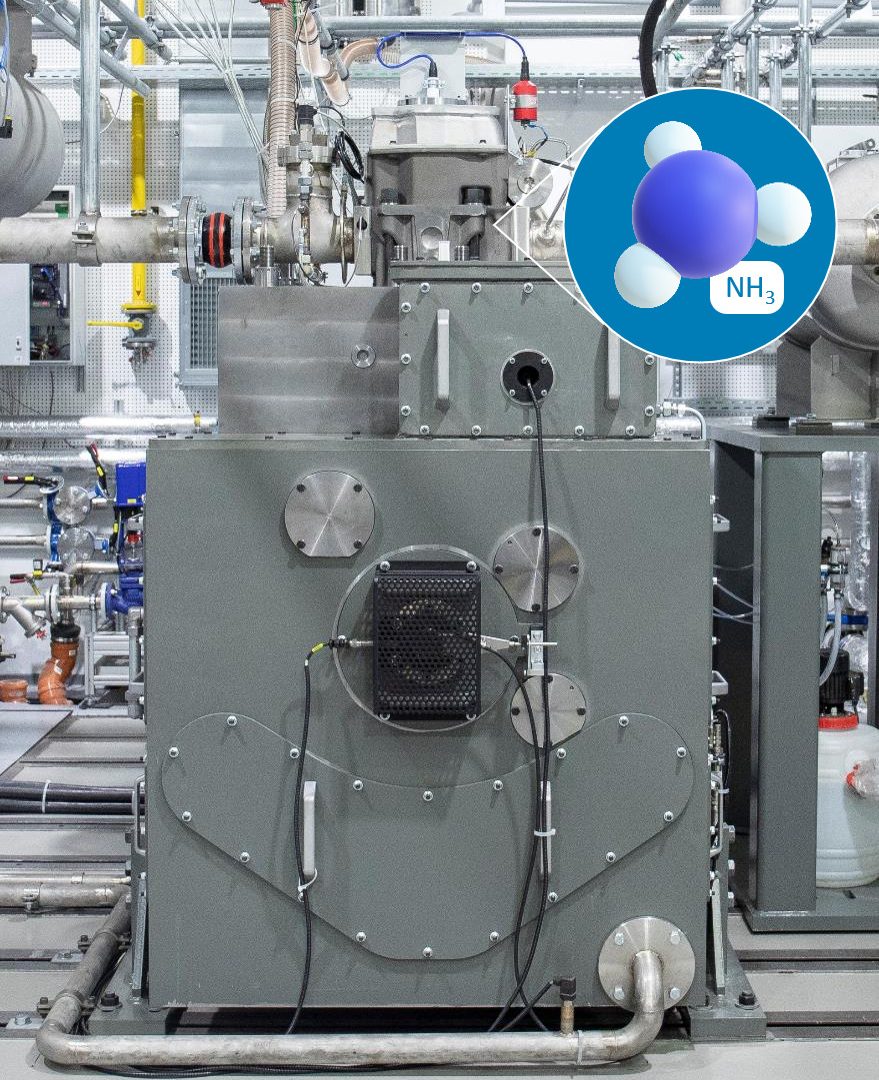
Why Ammonia Could Become an Alternative to Diesel
Ammonia is attracting growing interest as a potential energy carrier because of its chemical characteristics and the possibility of producing it using renewable energy.
Unlike conventional hydrocarbon fuels, ammonia contains no carbon, meaning that its combustion does not directly generate carbon dioxide from the fuel itself.
However, this does not mean that ammonia combustion is entirely emission-free. The process can generate nitrogen oxides and other pollutants, making combustion optimization and exhaust aftertreatment essential elements of engine development.
Another important advantage is the possibility of producing ammonia using renewable electricity, potentially in regions where wind and solar energy are available at competitive costs.
Compared with hydrogen, ammonia offers practical advantages in storage and transportation, thanks to its greater volumetric energy density under certain storage conditions and its ability to be stored as a liquid without the extremely low temperatures required for liquid hydrogen.
These characteristics could make ammonia an interesting option for transporting renewable energy over long distances and supplying sectors where battery-electric propulsion remains technically challenging.
For agricultural machinery, however, the transition to ammonia would require dedicated fuel systems, appropriate storage solutions and substantial modifications to conventional engine technology.
Combustion, Emissions and Safety: The Main Technical Challenges
Despite its potential, ammonia presents several technological challenges that must be addressed before it can become a practical alternative for agricultural applications.
One of the main difficulties concerns combustion characteristics. Compared with diesel, ammonia has different ignition and flame propagation properties, requiring specific engine development strategies to achieve stable combustion and efficient power delivery.
The GAMCO project will therefore investigate how an ammonia-based combustion system can deliver the performance required by high-power agricultural machinery.
Exhaust aftertreatment will represent another critical area of research, particularly regarding nitrogen oxide emissions and the control of unburned ammonia.
Fuel storage and handling will also require careful consideration. Ammonia is toxic and must be managed through dedicated safety systems, appropriate materials and suitable refueling procedures.
These aspects are especially relevant in agricultural environments, where machines frequently operate far from centralized infrastructure and must remain productive during intensive seasonal work.
The project aims to examine these technical requirements under realistic operating conditions, providing a more complete understanding of the opportunities and limitations of ammonia propulsion.
MAN Engines and WTZ Roßlau Lead Engine Development
Within the GAMCO partnership, MAN Engines and WTZ Roßlau are responsible for developing the ammonia-powered engine system.
Their work will focus on adapting internal combustion technology to the characteristics of ammonia, including fuel delivery, combustion management and exhaust gas treatment.
CLAAS, meanwhile, is responsible for integrating the propulsion system into an agricultural machine at its Harsewinkel facility in Germany.
This division of responsibilities allows the project to combine engine development expertise with the practical requirements of agricultural equipment.
The integration phase will be particularly important in evaluating how the new propulsion technology performs within a complete machine, taking into account power demand, installation constraints, fuel storage and operational requirements.
By connecting engine research directly with agricultural applications, the partners aim to determine whether ammonia could become a realistic energy solution for future high-performance machinery.
CLAAS: High-Power Agricultural Machines Will Still Need Energy-Dense Fuels
For CLAAS, the investigation of ammonia propulsion forms part of a broader assessment of alternative energy solutions for agricultural machinery.
The company recognizes that large tractors and harvesting machines present specific challenges for electrification, particularly because of their high power requirements and the need to operate for extended periods under full load.
Martin von Hoyningen-Huene, Executive Vice President of the CLAAS Tractor Business Unit, emphasized that high-performance agricultural equipment will continue to depend on energy-dense fuels in the foreseeable future.
According to the CLAAS executive, alternative fuels such as HVO (Hydrotreated Vegetable Oil) and, subject to appropriate approval, B100 biodiesel already offer opportunities to reduce the carbon footprint of agricultural machinery while making use of largely existing technologies and infrastructure.
Hydrogen, by contrast, presents greater technical challenges, particularly in terms of storage, infrastructure and integration into agricultural equipment.
Ammonia could potentially provide another option, although its actual suitability remains to be demonstrated.
Through GAMCO, CLAAS intends to gain a clearer understanding of both the opportunities and the technical limitations of ammonia-powered internal combustion engines.
Exploring New Paths Towards Agricultural Decarbonization
The GAMCO project highlights the growing interest in diversified propulsion strategies for the agricultural machinery sector.
While battery-electric systems are increasingly being investigated for compact tractors and lower-power applications, large agricultural machines face different operational constraints.
Their intensive duty cycles, high energy consumption and limited opportunities for frequent refueling make the development of alternative liquid fuels an important area of research.
In this context, ammonia could offer a possible pathway towards lower-carbon propulsion, provided that renewable production methods, engine efficiency, emissions control and safe handling can be successfully addressed.
The project also demonstrates that the internal combustion engine may continue to play a role in the energy transition, potentially operating with fuels that differ substantially from conventional diesel.
With GAMCO, CLAAS, MAN Engines and WTZ Roßlau are investigating whether ammonia can become a viable component of future agricultural propulsion systems.
Although the technology remains at the research and development stage, the results expected by 2029 could provide valuable insights into the potential contribution of ammonia-powered engines to the decarbonization of high-performance agricultural machinery.