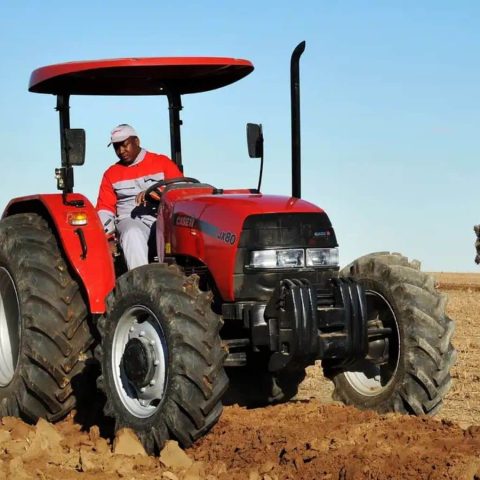
The population growth of the African continent, which will reach 2.5 billion by 2050, is transforming the challenge of food security into an opportunity. Recent estimates by the African Development Bank (AfDB) indicate that over the next five years, Africa’s agri-food market will triple in value, increasing from the current USD 280 billion to USD 1 trillion. To keep pace with these trends, it is necessary not only to focus on the exploitation of new land (60% of the arable land not yet cultivated is located in Africa) but also to promote the rationalization of local production systems and supply chains.
This was the central theme of the conference, titled “The New Africa: Education, Training, and Education for Agricultural and Agricultural Engineering Technicians,” which took place on the opening day of Agrilevante, the international exhibition of agricultural technologies for the Mediterranean, which took place in Bari, Italy.
The meeting, attended by Gianfranco Belgrano, director of the magazine Africa Affari and Internationalia publishing house and Mariateresa Maschio, president of FederUnacoma, featured a presentation of a new project, aimed at assessing the training needs of the African continent in the agricultural sector.
The first countries to be involved are Ghana, Tanzania, and Tunisia, the three countries indicated as priorities in the Mattei Plan. “In a context like Africa’s, where education systems are characterized by numerous problematic elements and a sizeable school dropout rate,” explained , “training plays an essential role in meeting the demand for new skills in a constantly evolving market, especially in the agricultural and agro-mechanical sectors”. It is in these sectors that great prospects for cooperation between Italian industries and African countries are opening up. “From the design of technologically advanced agricultural machinery to the creation of high-precision irrigation systems, from supply chain implementation to capacity building, our companies,” stated the president of FederUnacoma, “possess excellent know-how that can meet the training needs of African agricultural economies”.
“We decided to launch the project with Tanzania, Tunisia, and Ghana because,” added Gianfranco Belgrano, “these are countries with a lot of agricultural area, which have structured school systems and can therefore already begin collaboration programs with Italian companies”. Cooperation in the field of training has already had significant experience at the university and postgraduate levels – it was explained during the meeting – but it has not yet been considered at the level of technical and agricultural schools, which are instead essential for the training of agricultural mechanics technicians and which are the specific “target” of the new initiative.