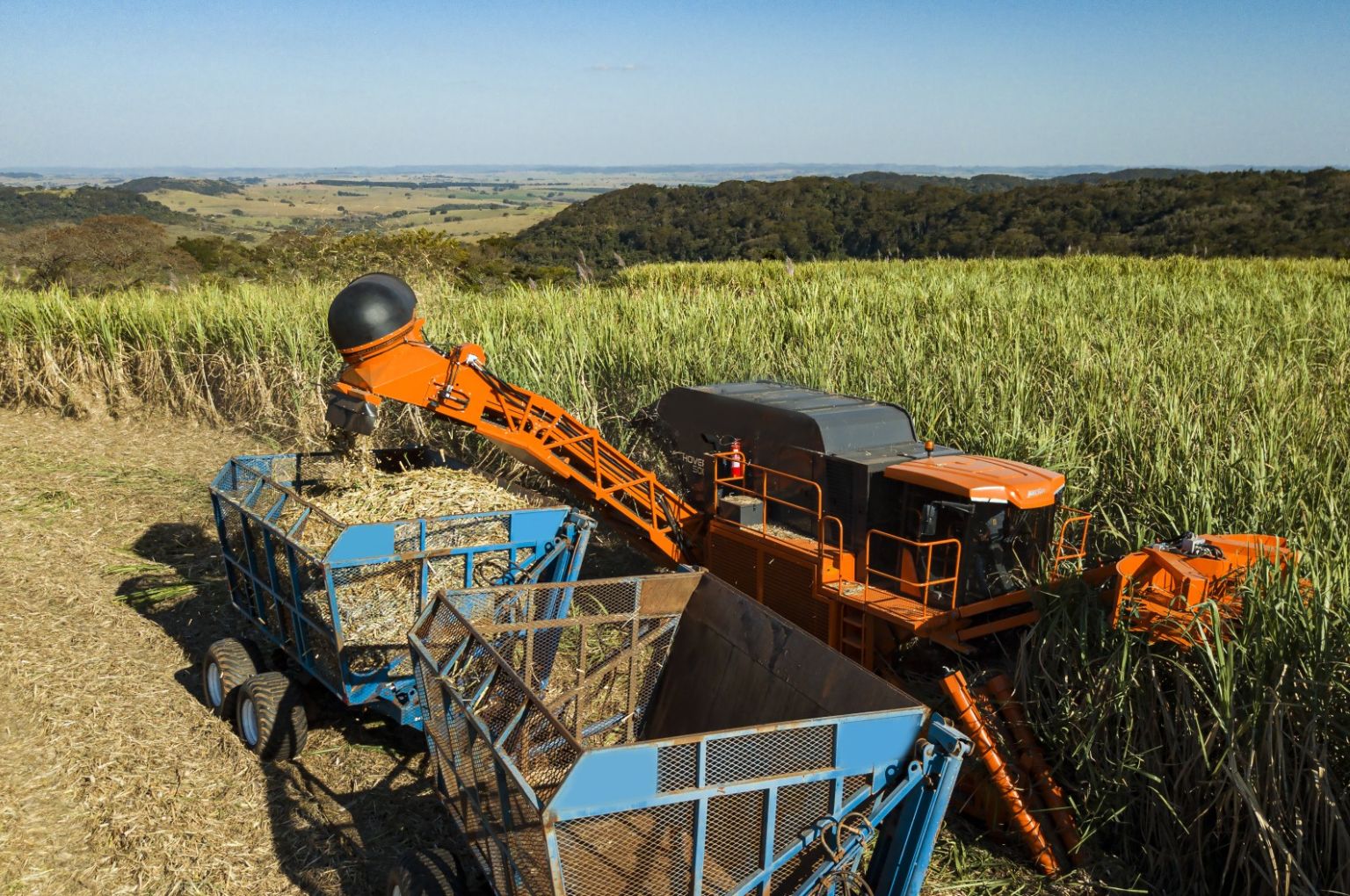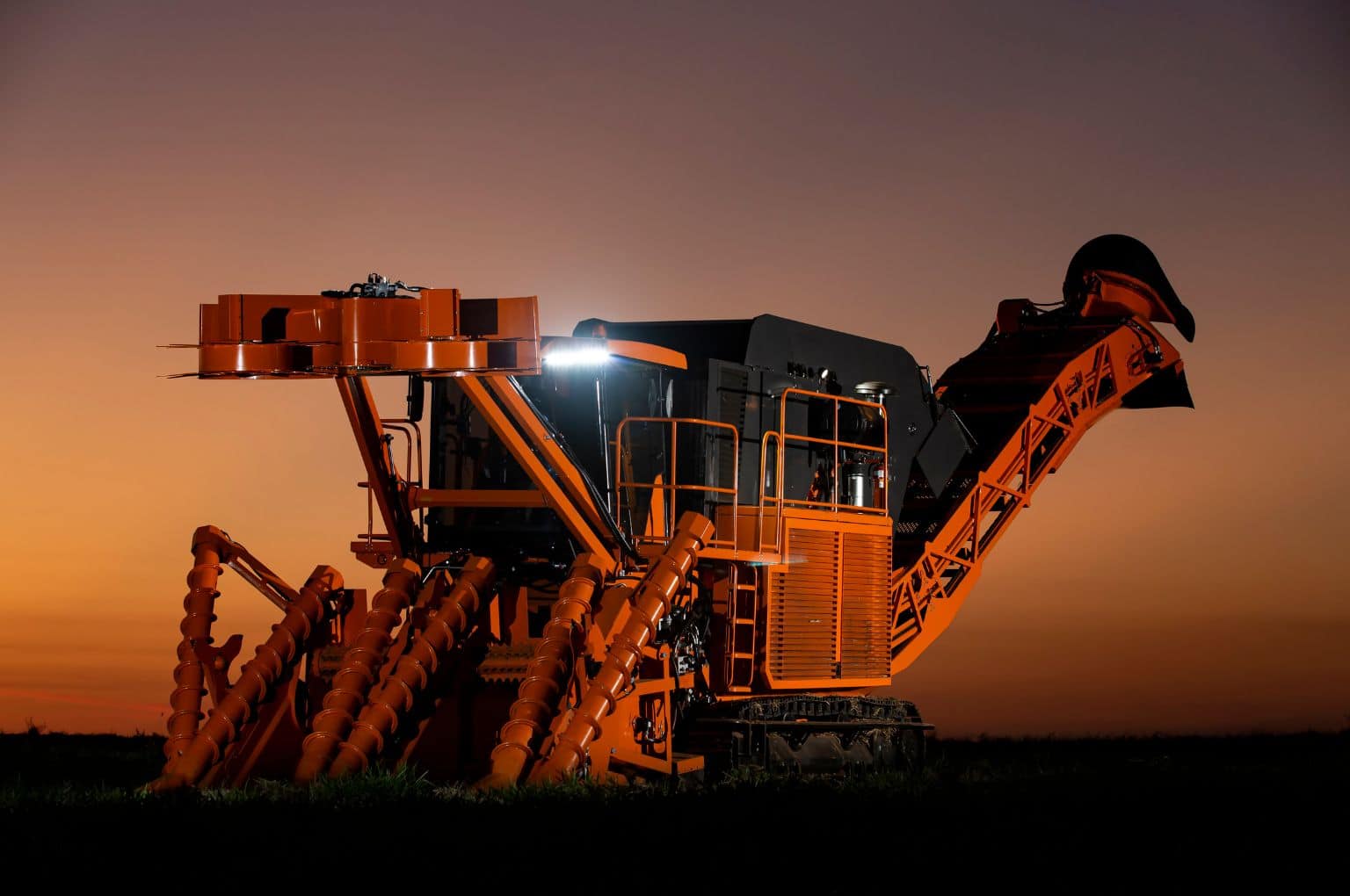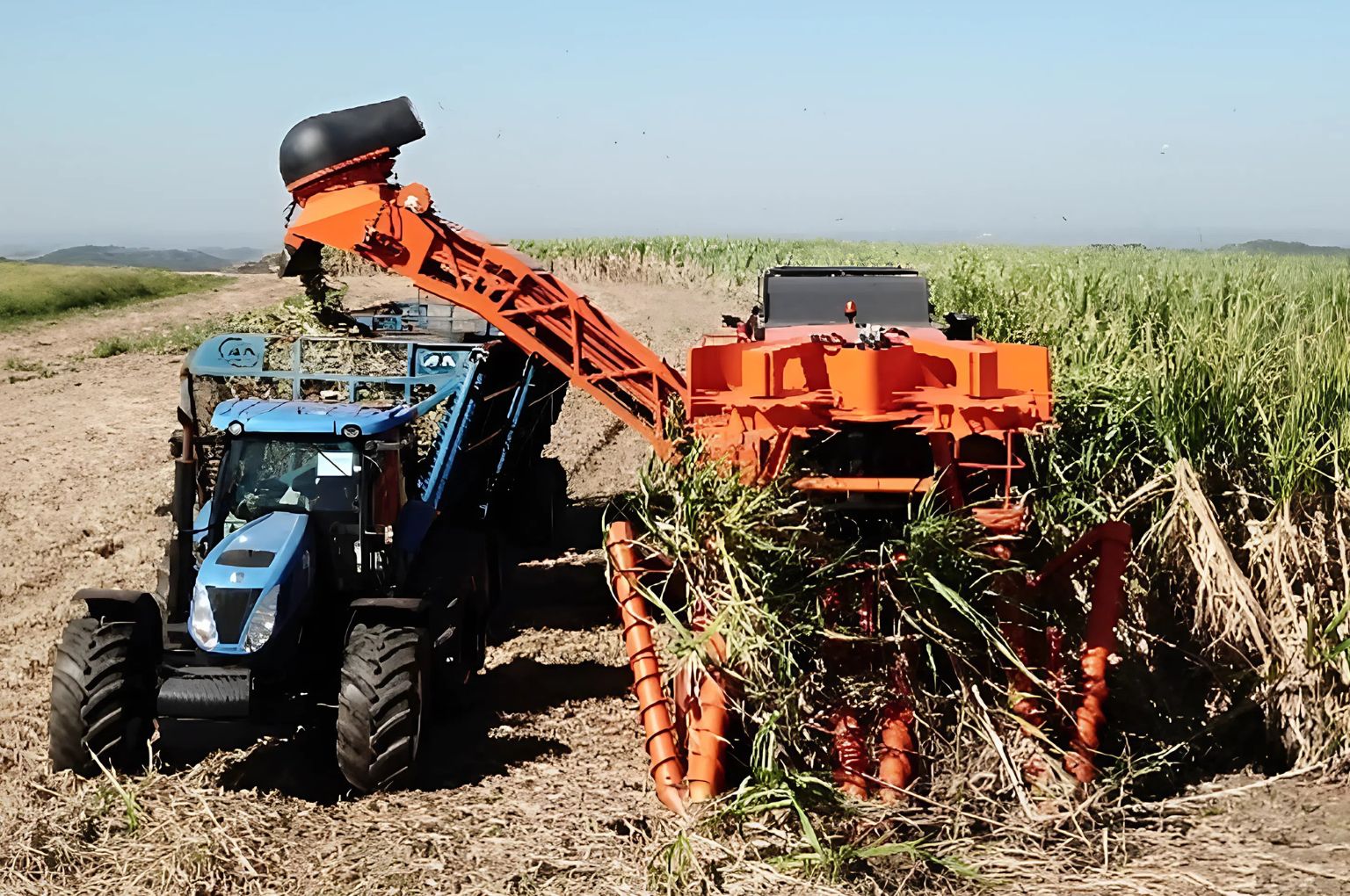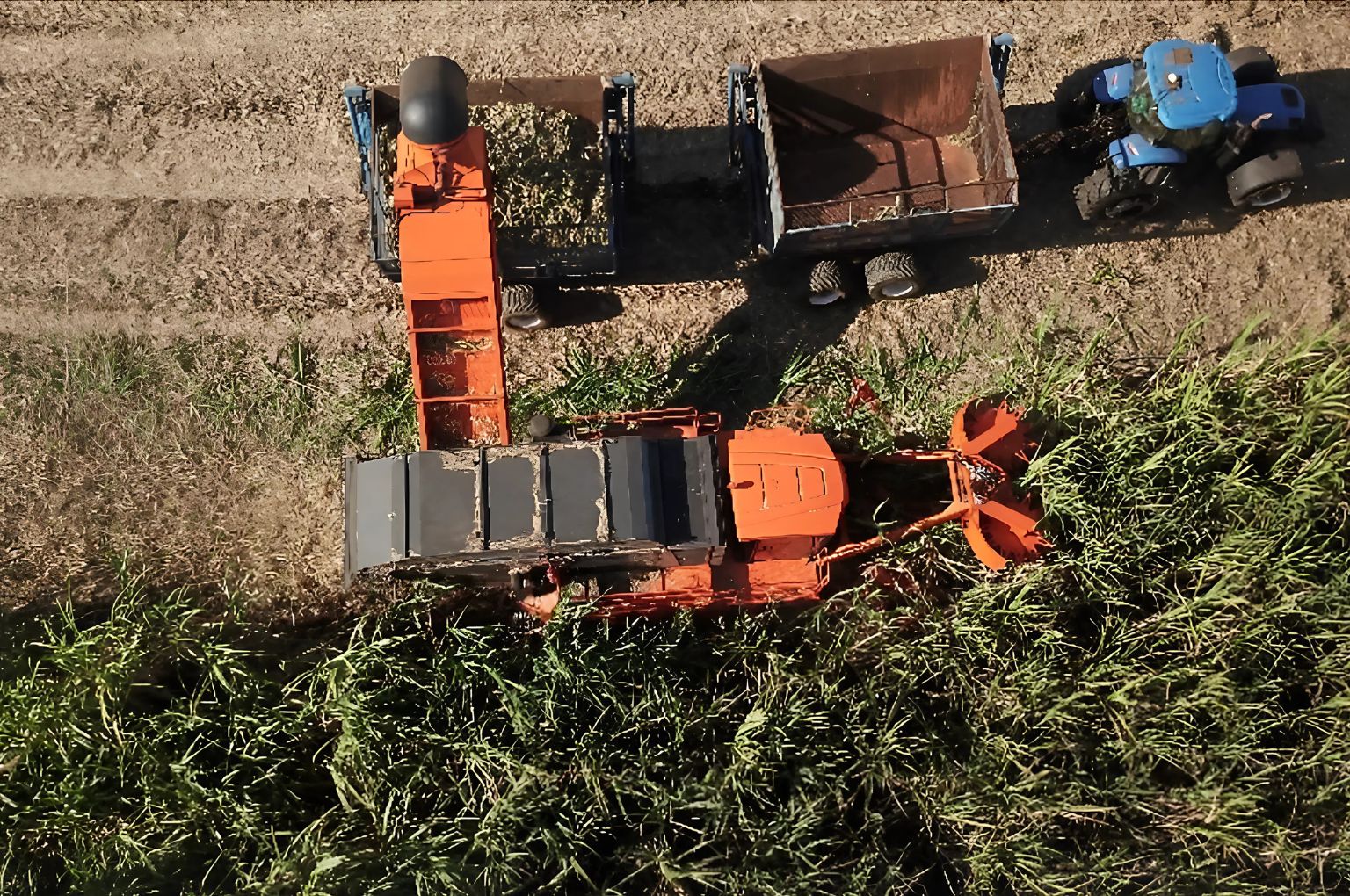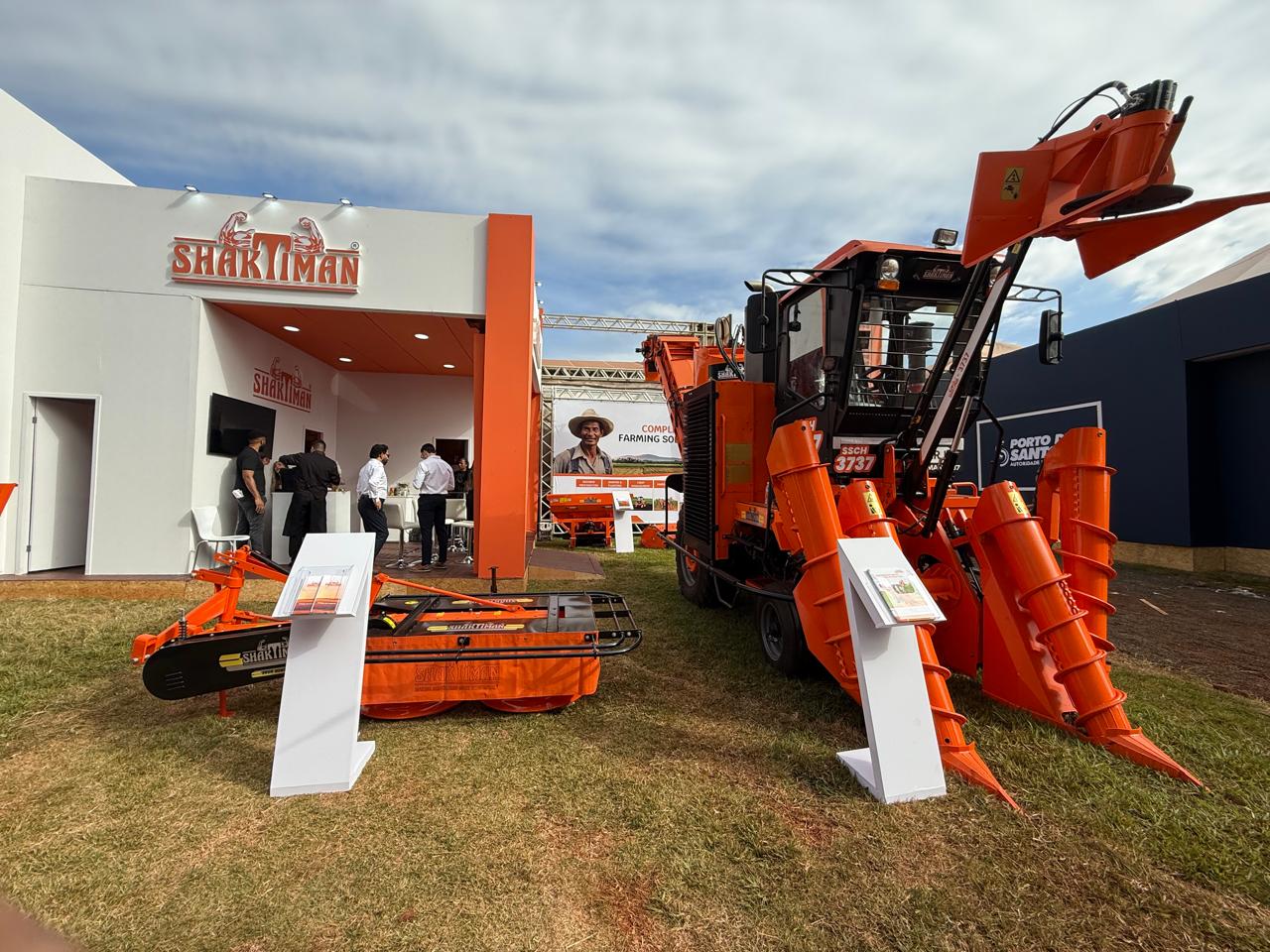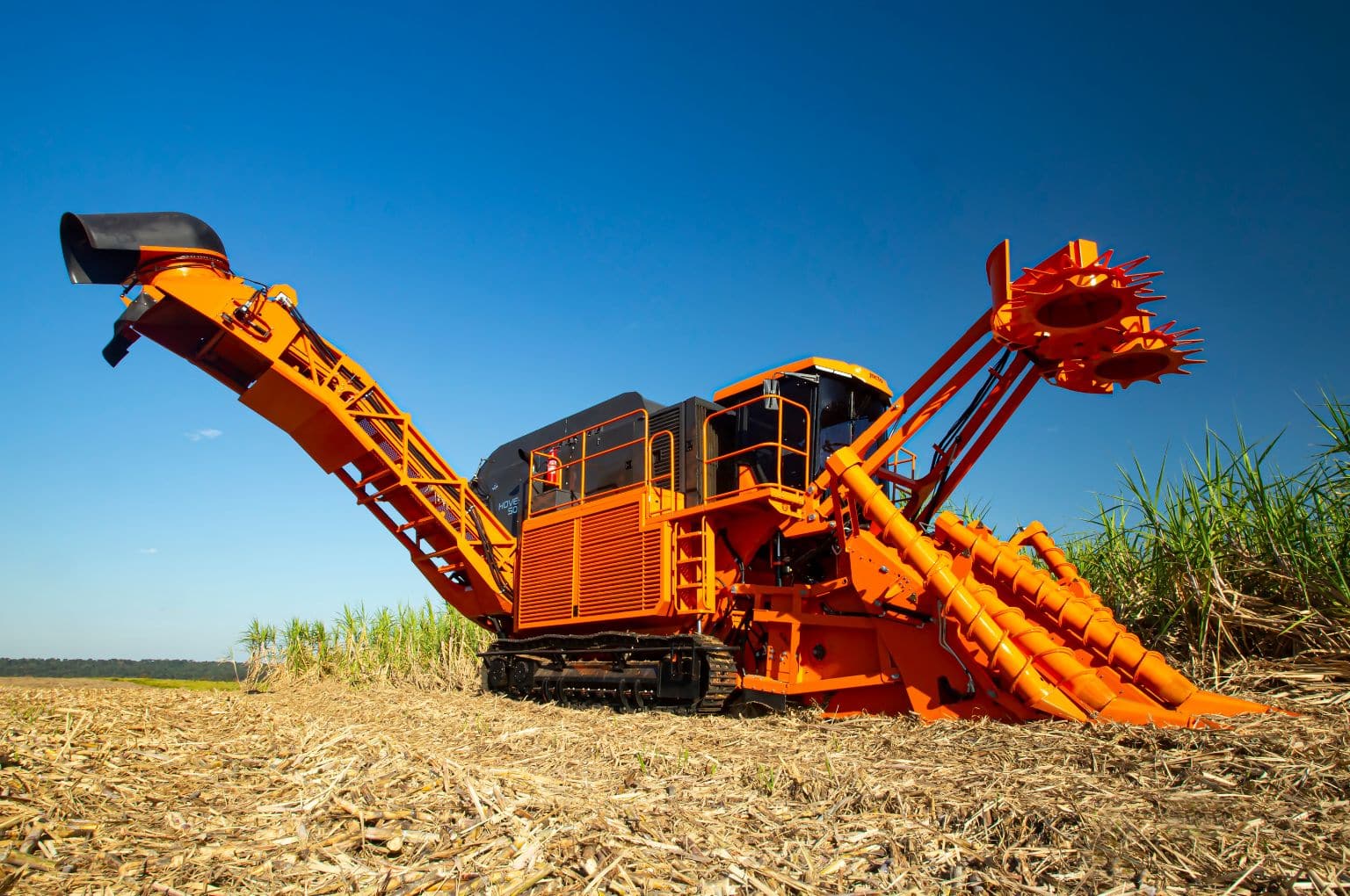
“We have become the first Brazilian company to offer a two-row sugarcane harvester”, says Jacto CEO Carlos Daniel Haushahn. “While developing the machine, we sought to understand how to provide a product that meets the need of sugarcane farmers. Today, when we assess the main harvest indicators – productivity, losses, vegetal and mineral impurities, and stump uprooting, we realize that Hover 500 has a performance similar or superior to machines available in the market,”, affirms.
Besides harvesting in two rows, the new harvester features technology, such as a sugarcane cut-and-transport device on the machine’s front end, a concept similar to a floating platform that enables more precise cutting with higher quality. This will help preserve the sugarcane crop’s productive capacity by adapting to different soil conditions, being more sensitive to terrain variations along sugarcane rows, avoiding uprooting of stumps, and reducing mineral impurities.
Unlike machines that use an exhaust-and-suction concept, the Hover harvester uses a cleaning method that blows air and creates two airflow streams from bottom to top, thus cleaning the sugarcane in two steps.
Energy efficient
Another benefiot from the machine is the expressive gains from fuel saving per ton of harvested sugarcane. Sugarcane harvesters usually work over 3,000 hours per year, and fuel consumption highly contributes to production costs. One-row harvesters operate with engines whose power ranges from 350 HP. Whereas the Jacto Hover operates at 470 HP while harvesting two rows at the same speed as a standard one-row harvester, reducing up to 35% of fuel consumption per ton of harvested sugarcane.
Also other solutions help reduce fuel consumption. Among these is the mechanical transmission system for the fans and cutter, which is more energy-efficient than standard systems. Finally, the 2.7-meter width track is dimensioned to fit exactly between the standard rows of sugarcane plantations – 1.5×1.5 m and 1.4 x1.4 m – and to coincide with the tracks made by trucks and trans-shipment vehicles. As a result, every piece of equipment runs on the same tracks. Compared to one-row harvesters, the Hover 500 reduces the compacted area by 60%.