Crop residue management remains a major environmental challenge in several agricultural regions of Asia, where burning straw and other plant material after harvesting is still widely practiced. In Thailand, however, CNH, with New Holland is demonstrating how relatively simple mechanization solutions can offer farmers a practical alternative, helping them manage crop residues while preserving valuable organic matter in the soil.
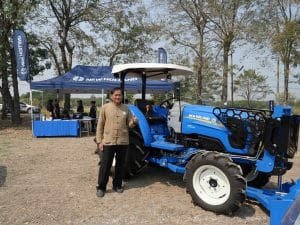
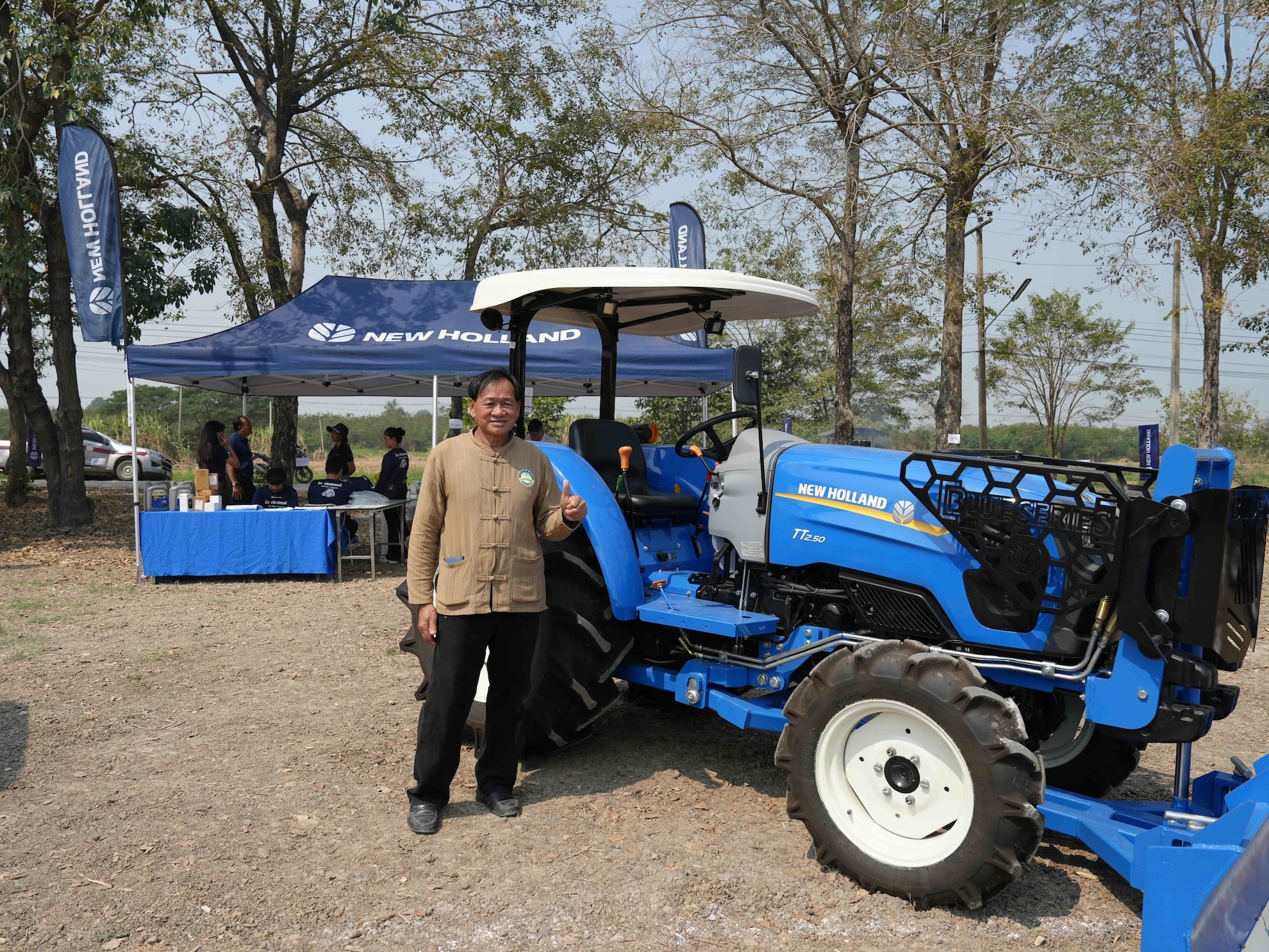
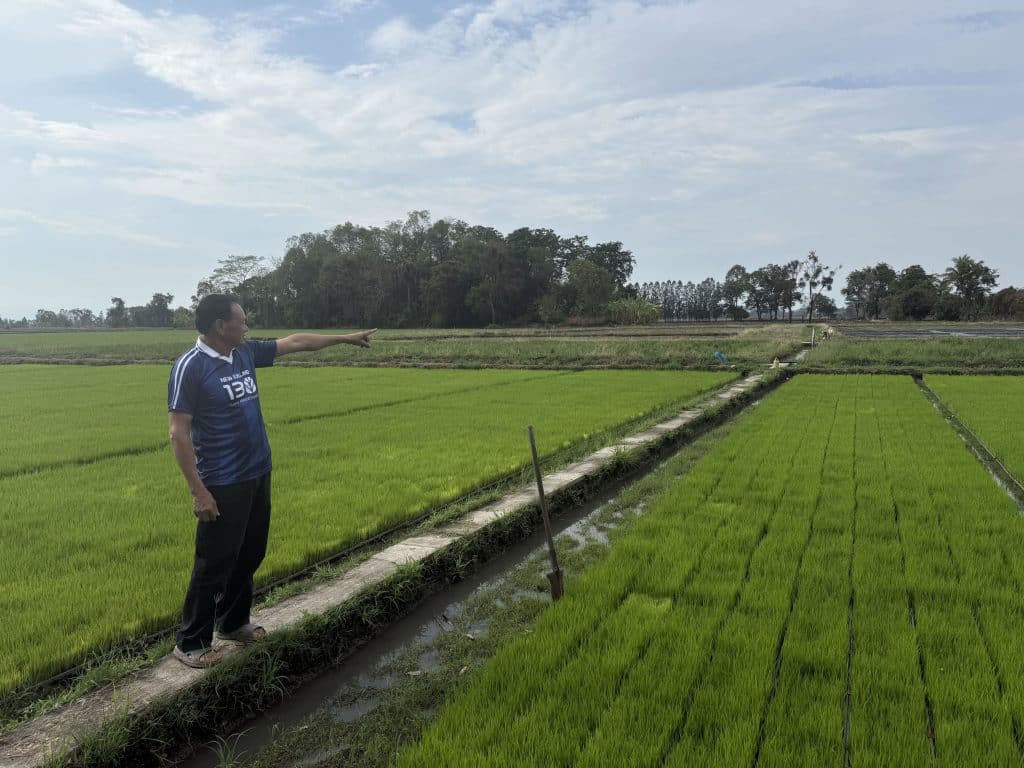
The initiative is featured in the latest edition of CNH’s A Sustainable Year series and focuses on the experience of Pichai Tosa, a rice and mung bean farmer in Nakhon Sawan province, central Thailand, who tested a New Holland TT3.50 tractor equipped with a mulcher during the April 2026 rice harvest.
Tosa, who also serves as president of a local rice production group, used the equipment to chop rice straw directly in the field, allowing the residues to remain on the soil surface or be incorporated into the ground rather than being burned.
An alternative to traditional stubble burning
For decades, open-field burning has been a common practice among rice and sugarcane farmers across Southeast Asia. It provides a quick and inexpensive way to clear fields between cropping cycles, particularly where the time available for preparing the next crop is limited.
However, the environmental consequences are significant. Burning agricultural residues contributes to atmospheric pollution and greenhouse gas emissions, while the high temperatures generated at the soil surface can damage beneficial microorganisms and accelerate the loss of soil carbon.
According to figures reported by CNH, approximately 4.8 million tonnes of rice straw are burned every year in the plains of central Thailand alone, highlighting the scale of the challenge.
As awareness of these environmental impacts increases, farmers are beginning to explore alternative residue-management practices. Tosa acknowledges that traditional burning methods were often adopted without a full understanding of their consequences. Today, he believes that new agricultural technologies and innovations are providing farmers with more sustainable options.
New Holland TT3.50 at work in rice fields
Rather than collecting and burning the straw remaining after harvesting, the mulcher mechanically chops the crop residues into smaller pieces, making them easier to distribute across the field or incorporate into the soil.
This approach offers several potential agronomic benefits. Retaining organic residues can help conserve soil moisture, support the gradual return of organic matter and nutrients to the ground and, over time, reduce dependence on chemical fertilizers.
The technique can also contribute to improved soil structure and biological activity, although the extent of these benefits depends on local soil conditions, residue quantities and subsequent crop-management practices.
From an operational perspective, the trial illustrates how a conventional agricultural tractor equipped with a suitable implement can provide a practical solution to a problem that has traditionally been addressed through burning.
Machinery, training and local partnerships
For CNH, the Thai initiative forms part of a broader strategy aimed at combining agricultural equipment with farmer education and locally adapted solutions.
“Farmers need solutions that work in their fields and respond to the economic and environmental realities of their businesses,” explained Mark Brinn, Managing Director for Southeast Asia and Japan at CNH.
According to Brinn, the trial demonstrates how machinery, practical training and partnerships can transform crop residues from a disposal problem into a potentially valuable agricultural resource.
The company is pursuing a similar approach in India through its Sustainable Environment Solution program, which combines mechanized baling operations with farmer training and field demonstrations.
While the technologies employed may differ according to local cropping systems and residue-management requirements, the underlying objective remains the same: providing farmers with economically viable alternatives to open burning.
Mechanization as a tool for sustainable agriculture
The experience in Thailand underlines the potential role of agricultural machinery in addressing environmental challenges that extend beyond conventional field productivity.
Residue management is increasingly becoming an important aspect of sustainable crop production, particularly in regions where intensive cultivation and short intervals between harvests place additional pressure on soil resources. By allowing farmers to retain or incorporate crop residues rather than burn them, mechanized solutions can support more efficient use of agricultural biomass and contribute to better long-term soil management.
The New Holland trial does not, by itself, establish the economic or environmental performance of the practice on a larger scale. Nevertheless, it provides a concrete example of how existing machinery technologies, supported by training and local cooperation, can help farmers move towards more sustainable production methods.
For CNH, it is also an opportunity to demonstrate how agricultural mechanization can contribute to environmental objectives while remaining closely connected to the practical needs of farmers.