HarvestLab 3000 available on combine harvesters
John Deere is now offering HarvestLab 3000 on the S and T-Series combine harvesters, expanding the use of near-infrared sensor to four applications by enabling constituent analysis for grain and rapeseed. HarvestLab 3000 is well known from self-propelled forage harvesters, stationary usage and manure sensing. Now it is an option on combine harvesters, called Grain […]
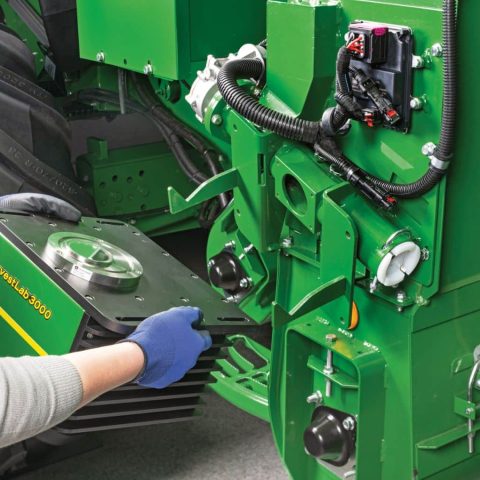
John Deere is now offering HarvestLab 3000 on the S and T-Series combine harvesters, expanding the use of near-infrared sensor to four applications by enabling constituent analysis for grain and rapeseed.
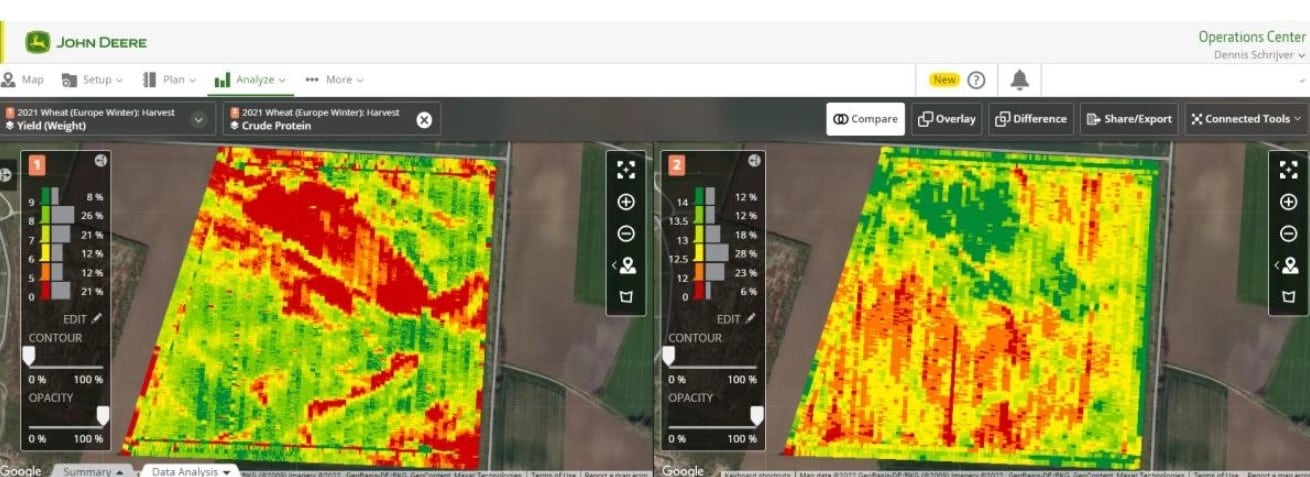
HarvestLab 3000 is well known from self-propelled forage harvesters, stationary usage and manure sensing. Now it is an option on combine harvesters, called Grain Sensing. This helps to measure important quality parameters in wheat, barley and rapeseed in real time and continuously. In addition to moisture, the protein content of wheat, barley and rapeseed can now be determined. Furthermore, the starch content of barley and the oil content of rapeseed can be recorded. These means farmers receive site specific information on the harvest quality of individual fields, which enables them to:
• Know for certain whether the wheat is of milling or feed quality. This allows batches to be stored separately according to quality and marketed in a more targeted way.
• Better documentation of the harvest as the grain quality is recorded at each individual point in the field.
• Compare varieties or validate their machine settings.
• An overview of which areas of the field have successfully converted nutrients (e.g. nitrogen) into yield and protein/oil, so they can better plan fertiliser application for the next season.
How it works
Grain Sensing is a fully integrated solution that is mounted on the clean grain elevator. The following components are required for use on the combine:
- HarvestLab 3000 near-infrared sensor
- Field-kit to install the sensor and the necessary hardware
- Grain sensing calibration
- Gen 4 display
- The JDLink agricultural management system solution
- StarFire receiver
Before the grains enter the grain tank, they pass directly in front of the HarvestLab 3000 with the help of a motor-driven auger. Together with the StarFire receiver, site-specific data can be generated on the Gen 4 display, which can automatically synchronize with the John Deere Operations Centre via JDLink. Here, harvest results can be reviewed with features such as Analyze and Field Analyzer. It is also possible to connect the Operations Center with partner software to gain further insight or create application maps for future input operations.
The HarvestLab measurement supports farmers in future cultivation and input planning. The solution helps to gain an overview of the amount of nutrients (especially N) extracted during the harvest. This can then be used to calculate the nutrient efficiency of each field zone.