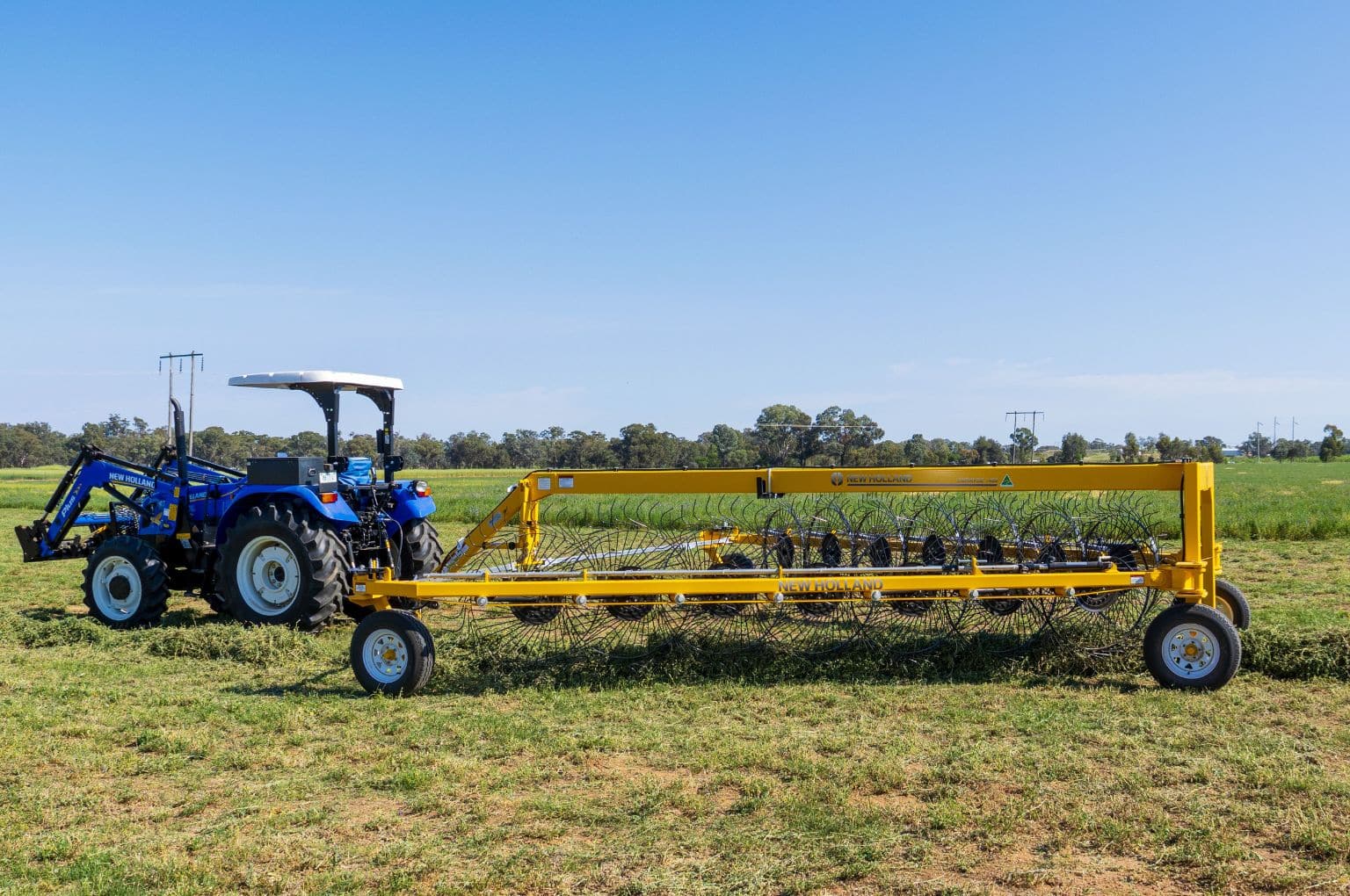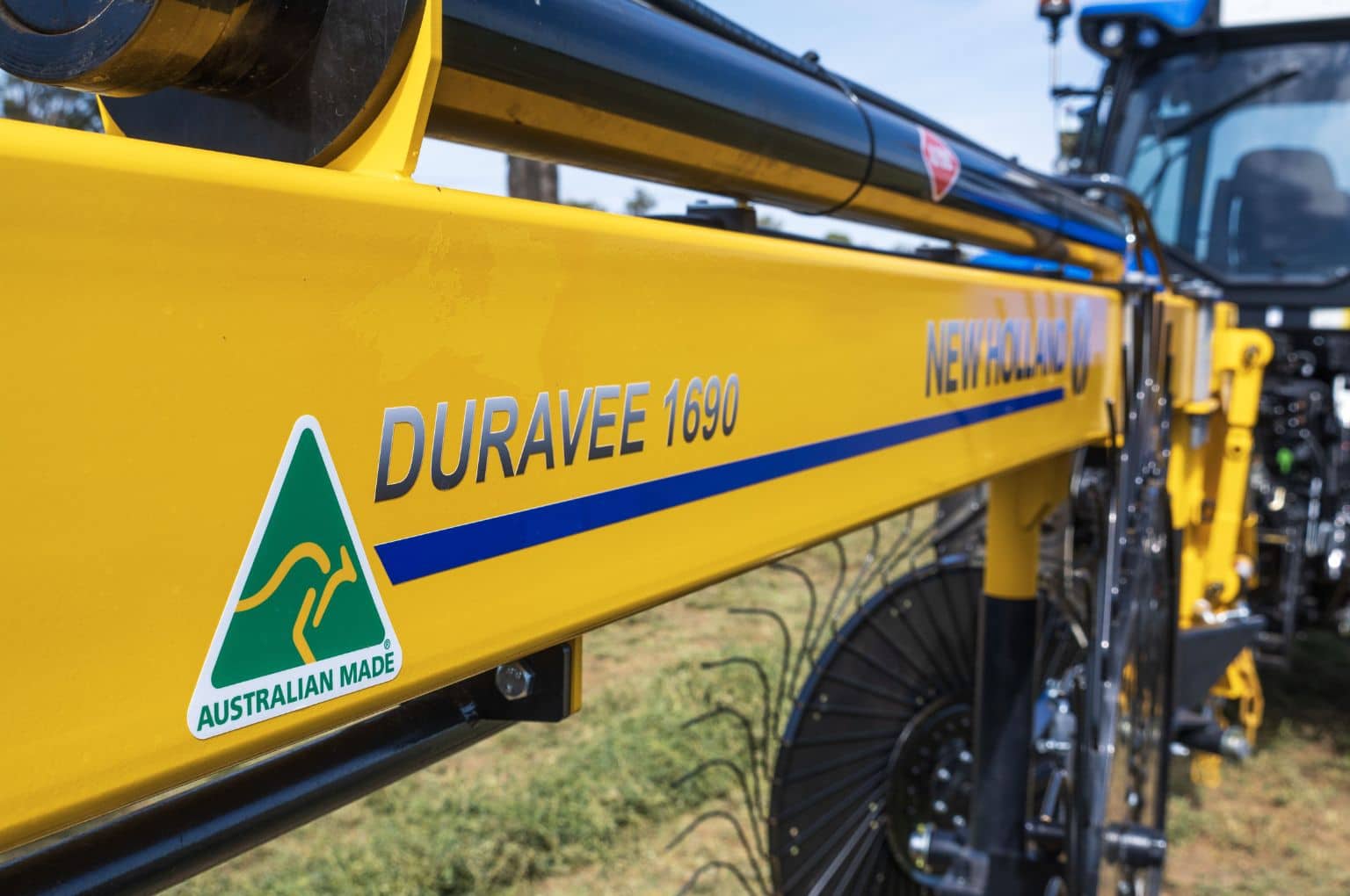
New Holland’s DuraVee wheel rake, manufactured in Cowra Australia for almost 30 years, now formally carries the “Australian Made” logo. The rake has been recognized for being tough, dependable, easy to maintain, and proven bulletproof performance in demanding Australian conditions.
Built at CNH’s Cowra manufacturing facility, the DuraVee and DuraVee Plus range now continues the heritage of the original K-Line Agriculture Delta and Delta Hay Pro rakes.
CNH acquired K-Line in 2019, and in 2022 New Holland rebranded the rakes in its line-up to the DuraVee and DuraVee Plus models. CNH Product Manager Hay & Forage, Sune Nielsen, said the DuraVee is about being tough, easy to operate and ready when you need it.
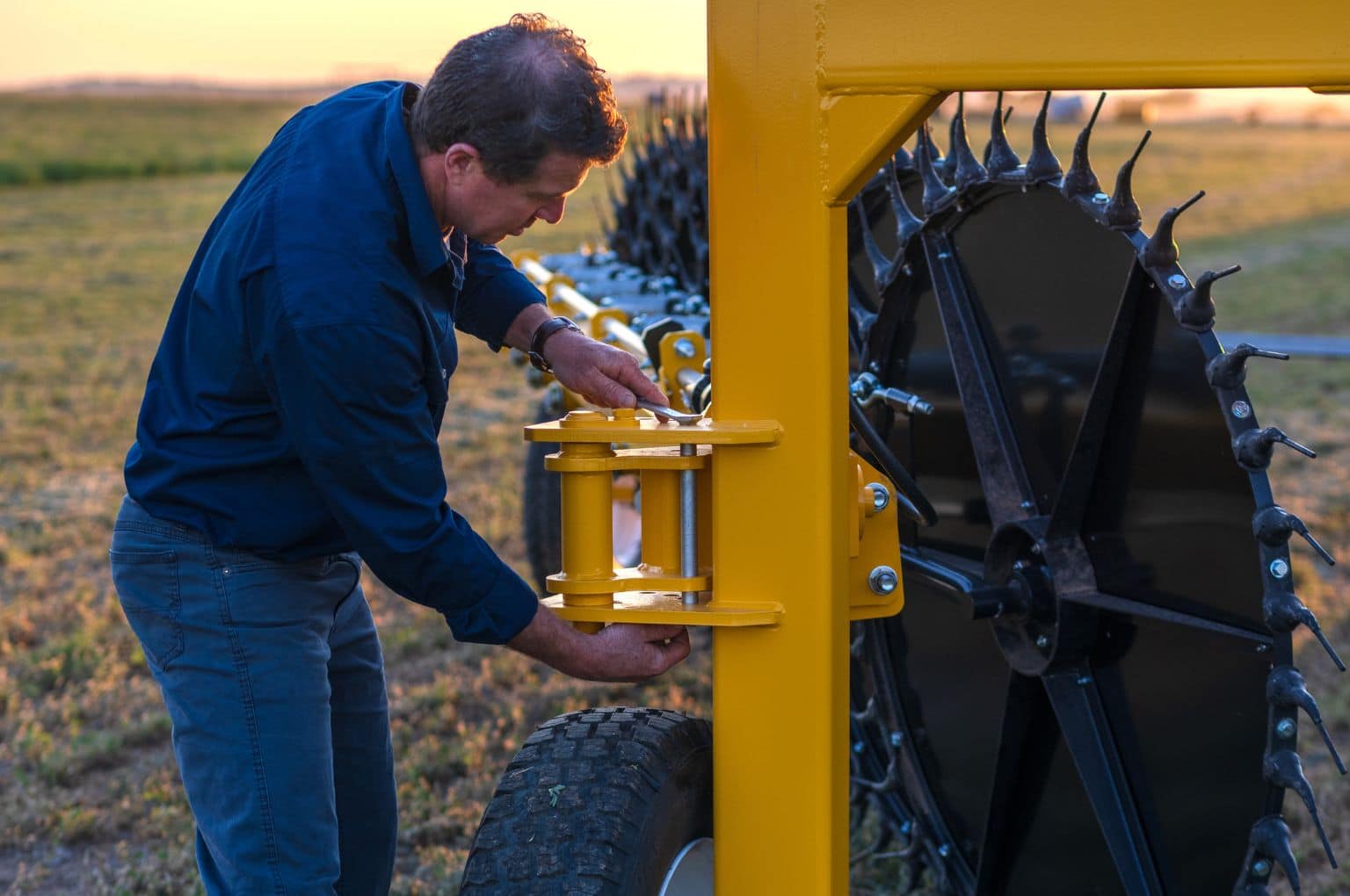
“With straightforward ‘steel and wheels’ construction and no electronics, there is very little to go wrong, making it an ideal machine to park in the shed and rely on year after year. “The rakes are robustly built from Australian steel with no Power Take-Off (PTO) required. Both the DuraVee’s ground-drive contact reels and the DuraVee Plus’ crop-contact reels use simple, readily available components, making servicing and maintenance easy.
The New Holland DuraVee range is designed for everyone involved in hay, fodder or livestock production, from small and hobby farmers, beef producers and dairy farmers through to large-scale broadacre operations and hay and silage contractors.
Optional features such as a hydraulic fold enables operators make ‘on the go’ rake width adjustments from the cab quickly and easily, while the splitter kit allows to rake three rows into one while also turning the center row, improving drying and giving a cleaner, more even windrow for the baler.
The DuraVee Plus has fill-in shields and rubber mounted tines designed not have ground contact, making it suitables for clean hay production, while the DuraVee is designed as an allrounder for hay and silage production, with optional heavy duty rake tines added for the silage application.
The DuraVee’s simplicity also makes it ideal as a drought rake for producers who only turn to hay when conditions demand it, such as in dry years or when a grain crop doesn’t make it and is cut instead.